Here we are at the top of the proverbial ivory tower of amor. The beautiful facade of sparkling glass jewels, like an ideal — sharp facets, reflecting the blinding sun, the brilliance diverting eyes from the crumbling foundations built up through the decades. The river is shallow, running through the archway, eroding the last bits of sturdy stone. The black is faded near to gray and the white is covered in dust, shabby — grown closer than ever but fading. The snow is whiter than the white. But how does one tell, looking from such a distance. A shadow lurks in the frame of picture perfection. It is there even when not captured on camera. The dull edge of a blade can still cut with intention. Sharp pain can be assuaged by pills while still bleeding out. Paint chips off the fire escape as we stand on the edge, flames obscured, emblazoned by fiery passion.
Come see us in our vainglory. Are we not exactly what you have aspired to be?
Wednesday, July 5, 2017
Monday, June 19, 2017
Before You Judge [fiction]
The names and people in this story are made up but the story itself is a literary amalgamation of various true stories told by people I have worked with. The legal parts is a basic template of a Motion to Reopen used in actual motions to immigration court, with citations to law and exhibits omitted. I have taken creative licenses in the writing.
Tuesday, May 9, 2017
The Disappearances [book review]
The Disappearances by Emily Bain MurphyMy rating: 4 of 5 stars
I received a digital advance reader's copy of this book through Netgalley. This book will be released on July 4, 2017.
In the town of Sterling, its citizens are cursed to lose something ordinary every seven years and nobody can figure out why. First they lose their sense of smell, then their reflections, followed by colors, dreams, the stars in the night sky, and the sound of music. They are called The Disappearances. Nobody who was a residence of Sterling when The Disappearances began could escape its effects, even if they leave, except for one, Aila and Miles Quinn’s mother, Juliet.
Fifteen year old Aila Quinn and her younger brother Miles are sent to live with the Cliftons, the family of their mother’s childhood best friend, in Sterling after their mother dies and their father is drafted to fight in the war. Aila is thrown into a world of mystery and mistrust as the town’s residences harbor a secret suspicion that her mother was the cause. Aila is determined to clear her mother’s name and, with the help of the Cliftons’ teenage son, friends from the Sterling high school, and her mother’s notes in her old copy of the Shakespeare plays, they work to get to the bottom of the curse. Meanwhile, an unknown menace from Aila’s mother’s childhood stalks ever closer, threatening the lives of not only Aila and her brother, but also those she has come to love, and the entire town of Sterling.
For a debut novel, this was an entertaining and engrossing read. Although the story was fairly predictable and a little slow going at times, it was satisfying. It is a good young adult novel full of the typical teenage angst, first loves, sibling fights and misunderstandings, and the struggle to grow up in a world of loss. Interspersed with the magic and mystery of the Disappearances, it is well-written, the characters are easy to like, and you find yourself invested in finding out what happens to them at the end. In all honesty, I was first drawn to the book’s cover, and then the story’s description was so intriguing, I had to read it. It was overall satisfying read.
View all my reviews
Thursday, April 6, 2017
[Untitled] [poem]
The ocean swallowed the beach, but that didn’t stop her
from walking into the monsoon waves,
naked,
cane in hand, hair like fire catching in the salt sea-spray storm —
everything had already been
lost,
there was nothing left to lose — her salt tears joined the salt sea.
Remembering a last birthday, before the storms came, before
the smoke and thunder, before the sky reflected the earth’s
darkness —
before, even, the last of the hummingbirds disappeared —
the flickering candles on the cake fighting for air
in the subdued festivities, uncertainty weighing
heavy
on every illuminated face, each breath waiting to be the last.
She closed her eyes against the oncoming rush, closed
them against the storm, wrapped herself in the warmth
of the candle flames, and she made a
wish
for tomorrow, flung out her arms to embrace the sea in
prayer,
instinct and belief intertwined one and the same,
sacrificing wisdom for madness, for the wisdom of
madness
and she opened her mouth wide and swallowed the sea
whole —
One gulp was all it took, engulfed it within herself,
engulfed by the sea that was the storm that was
hope
riding on the sea winds whistling to the heart of the world,
to the downed trees and the drowned lands,
in the spotlight of the moon, she used to say,
a dog is no longer a wolf, she said,
the freedom of the wild that has been taken, you cannot
reclaim.
And her cane lay at the bottom of the ocean, excess.
You broke it, now you must own it.
from walking into the monsoon waves,
naked,
cane in hand, hair like fire catching in the salt sea-spray storm —
everything had already been
lost,
there was nothing left to lose — her salt tears joined the salt sea.
Remembering a last birthday, before the storms came, before
the smoke and thunder, before the sky reflected the earth’s
darkness —
before, even, the last of the hummingbirds disappeared —
the flickering candles on the cake fighting for air
in the subdued festivities, uncertainty weighing
heavy
on every illuminated face, each breath waiting to be the last.
She closed her eyes against the oncoming rush, closed
them against the storm, wrapped herself in the warmth
of the candle flames, and she made a
wish
for tomorrow, flung out her arms to embrace the sea in
prayer,
instinct and belief intertwined one and the same,
sacrificing wisdom for madness, for the wisdom of
madness
and she opened her mouth wide and swallowed the sea
whole —
One gulp was all it took, engulfed it within herself,
engulfed by the sea that was the storm that was
hope
riding on the sea winds whistling to the heart of the world,
to the downed trees and the drowned lands,
in the spotlight of the moon, she used to say,
a dog is no longer a wolf, she said,
the freedom of the wild that has been taken, you cannot
reclaim.
And her cane lay at the bottom of the ocean, excess.
You broke it, now you must own it.
Tuesday, March 21, 2017
Stella '17 [poem]
Note: This poem was published in Rigorous, an online journal edited and written by people of color, in Volume 1, Issue 2.
These high piles of snow lining the sides of the streets
has me walking on the straight and narrow,
starting and ending at the crosswalks,
waiting for the lights, and looking out for cars,
like you’re supposed to;
no more short cuts between parked cars,
no more jaywalking in the middle of the street,
no more detours through driveways and bike lanes...
I'm left with no other choice but to navigate
thin patches of concrete wide enough only for one person,
single-person meandering walkways,
negotiating with other unfortunate pedestrians
for that precious piece of clean sidewalk
through the white snow, packed snow, dirty snow,
navigating treacherously over brown slush
halfway through the crosswalk, only to be stopped
by a dark gray puddle of melted once-snow,
looking like the cold mush of nightmares,
that you need to leap over, run around, climb past
over the packed slick hills, or risk walking through it
(how deep is it, really?).
I always supposed the straight and narrow
to be the road of least resistance, but now that I realize
it is only full of hidden dangers and unexpected troubles,
I think I prefer my way of clever shortcuts and
shrewd calculations, risking known dangers and
making leaps of faith,
for you are not entirely blind when making your own way;
you are guided by life's experiences.
These high piles of snow lining the sides of the streets
has me walking on the straight and narrow,
starting and ending at the crosswalks,
waiting for the lights, and looking out for cars,
like you’re supposed to;
no more short cuts between parked cars,
no more jaywalking in the middle of the street,
no more detours through driveways and bike lanes...
I'm left with no other choice but to navigate
thin patches of concrete wide enough only for one person,
single-person meandering walkways,
negotiating with other unfortunate pedestrians
for that precious piece of clean sidewalk
through the white snow, packed snow, dirty snow,
navigating treacherously over brown slush
halfway through the crosswalk, only to be stopped
by a dark gray puddle of melted once-snow,
looking like the cold mush of nightmares,
that you need to leap over, run around, climb past
over the packed slick hills, or risk walking through it
(how deep is it, really?).
I always supposed the straight and narrow
to be the road of least resistance, but now that I realize
it is only full of hidden dangers and unexpected troubles,
I think I prefer my way of clever shortcuts and
shrewd calculations, risking known dangers and
making leaps of faith,
for you are not entirely blind when making your own way;
you are guided by life's experiences.
zig zag
Wednesday, February 15, 2017
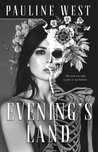
Evening's Land [book review]
Evening's Land by Pauline WestMy rating: 5 of 5 stars
I received a digital reader’s advance copy of this book through Netgalley. What drew me to this title was the description: “The dark elegance of Anne Rice’s THE WITCHING HOUR meets the lush parallel worlds of Neil Gaiman’s SANDMAN series.” I did not read the description any further before I requested an advanced reading copy. Neil Gaiman is my favorite writer and I would jump at reading anything recommended by him or compared to his writing. And Anne Rice’s popularity and reputation as a writer of ornate prose and attention to detail makes her a notable name among modern fiction writers. So when this book was described as Anne Rice meets Neil Gaiman, I immediately wanted to read it.
And I was not disappointed.
I was drawn in from the very first paragraph. One of the things I love most about Neil Gaiman’s writing is that his metaphors and descriptions make you stop in wonder and amazement at the way it makes you see something in a new and different way. Pauline West’s writing has a similar feel, creating a sense of awe and wonder as it draws you deeper in the story and the lives and struggles of the characters. The metaphors and descriptions hooked from the very beginning: “…his uncle was a big, barrel-chested autocross king, with a scrim of curly red hair that could have upholstered a sofa, and dancing ladies tattooed up both his arms—”. And in describing the first taste of beer “[t]he first gulp was like blood and nickels. The next came sweet and bready and light and suddenly it was going down like Missouri sunshine.”
The story is about a young woman named Ada who has a supernatural ability to open up a doorway between our reality and a dream reality called Evening’s Land. It is about how Ada holds on to her best friend whom she had lost to suicide after a terrible trauma. It is about a young woman coming to terms with her life after trauma and heartbreak, and learning to let go after desperately trying to hold onto a life that no longer existed. She encounters people, other-worldly creatures, and even the dead, all eager to use her and her abilities for their own ends at whatever the cost. As she comes to terms with her powers, she also comes to terms with her sexuality and with the death of her friend.
Pauline West’s writing is beautiful, full of poetry and prose, and near-perfect metaphors that really get at the moods of the moment. Her writing flows easily and masterfully from one imagery to the next, drawing you so deep into the story, you would think you’re right there watching it all unfold. I often came out of a reading session a little dazed and wishing I didn’t have to put down the book to attend to my other responsibilities. The main narrator is Ada, the point-of-view through which most of the story is told, but West uses the points of view of several other characters throughout the book to clarify plot and setting and to increase tension by giving the reader information that the main character does not have. I finished reading the book in less than five days (and I would have finished sooner if I didn’t have to work and sleep).
I must add that this novel is rather dark, dealing with suicide, rape, sexual and mental abuse, and satanism. It is not a light read for the faint-of-heart or for someone with a sensitive constitution (or someone who is easily offended).
This novel comes out on February 20, 2017 and I highly recommend a read!
View all my reviews
Wednesday, February 1, 2017
I promise to tidy up before company arrives [poem]
I promise to tidy up before company arrives
I wouldn’t want to leave my shoes
and daydreams
all over the floor
covering up the neat facade
of our life together
Today I will move all my half-read books
to the half-empty bookcase
in the guest room
where we rarely house guests,
My places carefully marked with
whatever I can find at hand—
An old ticket stub, faded and yellowed, in
Gertrude Stein’s Tender Buttons,
a post-it note phone number
of a long-forgotten acquaintance in
Virginia Woolf’s Mrs. Dalloway,
a three-year-old love letter in
Neil Gaiman’s Stardust (how fitting!),
Marking the places I will return to
when I have got the time
Tomorrow I will dust the living room,
and scrub the kitchen
clean of all the food splatters of
day-to-day living—
The remnants of who we are what we eat
scrubbed clean until marble surfaces
sparkle like showroom kitchens.
The dusty layers of disuse
will be cleared from the unlived-in
“living room” which has
become a place of storage for
Things-I-do-not-need-to-deal-with-
immediately
I have become practiced in messy organization,
of tucking things out of sight
in drawers, thrown haphazardly in boxes,
cluttered in closets in the attic,
while you’re not looking.
A pile of correspondence, bills, greeting cards
“neatly” obscures the surface of my desk—
I know exactly where everything is
so long as you don’t disturb my (dis)order
I promise to tidy up before company arrives
so that all they will see is the
practiced perfection, surface beauty
of our happy life
full of hidden chaos
I wouldn’t want to leave my shoes
and daydreams
all over the floor
covering up the neat facade
of our life together
Today I will move all my half-read books
to the half-empty bookcase
in the guest room
where we rarely house guests,
My places carefully marked with
whatever I can find at hand—
An old ticket stub, faded and yellowed, in
Gertrude Stein’s Tender Buttons,
a post-it note phone number
of a long-forgotten acquaintance in
Virginia Woolf’s Mrs. Dalloway,
a three-year-old love letter in
Neil Gaiman’s Stardust (how fitting!),
Marking the places I will return to
when I have got the time
Tomorrow I will dust the living room,
and scrub the kitchen
clean of all the food splatters of
day-to-day living—
The remnants of who we are what we eat
scrubbed clean until marble surfaces
sparkle like showroom kitchens.
The dusty layers of disuse
will be cleared from the unlived-in
“living room” which has
become a place of storage for
Things-I-do-not-need-to-deal-with-
immediately
I have become practiced in messy organization,
of tucking things out of sight
in drawers, thrown haphazardly in boxes,
cluttered in closets in the attic,
while you’re not looking.
A pile of correspondence, bills, greeting cards
“neatly” obscures the surface of my desk—
I know exactly where everything is
so long as you don’t disturb my (dis)order
I promise to tidy up before company arrives
so that all they will see is the
practiced perfection, surface beauty
of our happy life
full of hidden chaos
http://www.kerriewarren.com.au/patterns-in-chaos/
Subscribe to:
Posts (Atom)