Tuesday, March 21, 2017

Stella '17 [poem]

Note: This poem was published in Rigorous, an online journal edited and written by people of color, in Volume 1, Issue 2.


These high piles of snow lining the sides of the streets
has me walking on the straight and narrow, 
starting and ending at the crosswalks, 
waiting for the lights, and looking out for cars,
like you’re supposed to;
no more short cuts between parked cars,
no more jaywalking in the middle of the street,
no more detours through driveways and bike lanes...
I'm left with no other choice but to navigate
thin patches of concrete wide enough only for one person,
single-person meandering walkways,
negotiating with other unfortunate pedestrians
for that precious piece of clean sidewalk
through the white snow, packed snow, dirty snow,
navigating treacherously over brown slush
halfway through the crosswalk, only to be stopped
by a dark gray puddle of melted once-snow,
looking like the cold mush of nightmares,
that you need to leap over, run around, climb past
over the packed slick hills, or risk walking through it
(how deep is it, really?).
I always supposed the straight and narrow
to be the road of least resistance, but now that I realize
it is only full of hidden dangers and unexpected troubles,
I think I prefer my way of clever shortcuts and
shrewd calculations, risking known dangers and
making leaps of faith,
for you are not entirely blind when making your own way;
you are guided by life's experiences.


zig zag

Wednesday, February 15, 2017

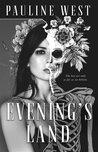
Evening's Land [book review]

Evening's LandEvening's Land by Pauline West
My rating: 5 of 5 stars

I received a digital reader’s advance copy of this book through Netgalley. What drew me to this title was the description: “The dark elegance of Anne Rice’s THE WITCHING HOUR meets the lush parallel worlds of Neil Gaiman’s SANDMAN series.” I did not read the description any further before I requested an advanced reading copy. Neil Gaiman is my favorite writer and I would jump at reading anything recommended by him or compared to his writing. And Anne Rice’s popularity and reputation as a writer of ornate prose and attention to detail makes her a notable name among modern fiction writers. So when this book was described as Anne Rice meets Neil Gaiman, I immediately wanted to read it.

And I was not disappointed.

I was drawn in from the very first paragraph. One of the things I love most about Neil Gaiman’s writing is that his metaphors and descriptions make you stop in wonder and amazement at the way it makes you see something in a new and different way. Pauline West’s writing has a similar feel, creating a sense of awe and wonder as it draws you deeper in the story and the lives and struggles of the characters. The metaphors and descriptions hooked from the very beginning: “…his uncle was a big, barrel-chested autocross king, with a scrim of curly red hair that could have upholstered a sofa, and dancing ladies tattooed up both his arms—”. And in describing the first taste of beer “[t]he first gulp was like blood and nickels. The next came sweet and bready and light and suddenly it was going down like Missouri sunshine.”

The story is about a young woman named Ada who has a supernatural ability to open up a doorway between our reality and a dream reality called Evening’s Land. It is about how Ada holds on to her best friend whom she had lost to suicide after a terrible trauma. It is about a young woman coming to terms with her life after trauma and heartbreak, and learning to let go after desperately trying to hold onto a life that no longer existed. She encounters people, other-worldly creatures, and even the dead, all eager to use her and her abilities for their own ends at whatever the cost. As she comes to terms with her powers, she also comes to terms with her sexuality and with the death of her friend.

Pauline West’s writing is beautiful, full of poetry and prose, and near-perfect metaphors that really get at the moods of the moment. Her writing flows easily and masterfully from one imagery to the next, drawing you so deep into the story, you would think you’re right there watching it all unfold. I often came out of a reading session a little dazed and wishing I didn’t have to put down the book to attend to my other responsibilities. The main narrator is Ada, the point-of-view through which most of the story is told, but West uses the points of view of several other characters throughout the book to clarify plot and setting and to increase tension by giving the reader information that the main character does not have. I finished reading the book in less than five days (and I would have finished sooner if I didn’t have to work and sleep).

I must add that this novel is rather dark, dealing with suicide, rape, sexual and mental abuse, and satanism. It is not a light read for the faint-of-heart or for someone with a sensitive constitution (or someone who is easily offended).

This novel comes out on February 20, 2017 and I highly recommend a read!

View all my reviews

Wednesday, February 1, 2017

I promise to tidy up before company arrives [poem]

I promise to tidy up before company arrives
I wouldn’t want to leave my shoes
and daydreams
all over the floor
covering up the neat facade
of our life together

Today I will move all my half-read books
to the half-empty bookcase
in the guest room
where we rarely house guests,
My places carefully marked with
whatever I can find at hand—
An old ticket stub, faded and yellowed, in
Gertrude Stein’s Tender Buttons,
a post-it note phone number
of a long-forgotten acquaintance in
Virginia Woolf’s Mrs. Dalloway,
a three-year-old love letter in
Neil Gaiman’s Stardust (how fitting!),
Marking the places I will return to
when I have got the time

Tomorrow I will dust the living room,
and scrub the kitchen
clean of all the food splatters of
day-to-day living—
The remnants of who we are what we eat
scrubbed clean until marble surfaces
sparkle like showroom kitchens.
The dusty layers of disuse
will be cleared from the unlived-in
“living room” which has
become a place of storage for
Things-I-do-not-need-to-deal-with-
immediately

I have become practiced in messy organization,
of tucking things out of sight
in drawers, thrown haphazardly in boxes,
cluttered in closets in the attic,
while you’re not looking.
A pile of correspondence, bills, greeting cards
“neatly” obscures the surface of my desk—
I know exactly where everything is
so long as you don’t disturb my (dis)order

I promise to tidy up before company arrives
so that all they will see is the
practiced perfection, surface beauty
of our happy life
full of hidden chaos

http://www.kerriewarren.com.au/patterns-in-chaos/

Monday, January 23, 2017

In the Shadow of Lakecrest [book review]

In the Shadow of LakecrestIn the Shadow of Lakecrest by Elizabeth Blackwell
My rating: 3 of 5 stars

I bought this book as a Kindle First offering in January 2017 at a highly discounted price. The expected publication date for this book is February 1, 2017.

From the first chapter, this book reminded me of Daphne du Maurier’s Rebecca, a Gothic romance first published in 1983. Like Rebecca, In the Shadow of Lakecrest is about a young working class woman who marries a wealthy man with a mysterious background. In fact, the parallels are conspicuous, at least in the beginning—the narrator in Rebecca was a lady’s companion and the narrator in In the Shadow of Lakecrest is a governess, both were on holiday with their respective employers when they met their wealthy husband-to-be, and finally, the story centers around the family manor and family’s mysterious past.

I had read Rebecca a few years ago and the beginning of this book, I would say the first quarter of the book, greatly paralleled Rebecca, so much so that I began to wonder if the author just rewrote the du Maurier novel with minor changes in characters and premise. But Lakecrest soon diverged into its own storyline.

In the Shadow of Lakecrest is a light gothic novel about a young governess and companion to wealthy daughters who snags and marries a rich businessman with a mysterious family past. Kate Moore and her rich husband, Matthew Lemont, returns to live at his family’s estate in the pre-Depression Chicago suburbs, where Kate feels ill-equipped to handle an overbearing mother-in-law and high-spirited sister-in-law. She learns that her husband is not the calm and confident man she married and is instead haunted by nightmares of a past that has affected his mental health. She discovers unsavory family secrets and the mysterious disappearance of Matthews aunt.

The story started out well with the build-up of the characters’ relationships and the suspenseful build-up of the family secrets and mysteries. But I feel like the story devolved by the second half of the book, both in the storyline and in the behavior of the characters, which could not be explained by the events that were occurring. It made it difficult to remain empathic to the characters. The storyline also devolved with the seemingly random occurrence of events, like Matthew’s twin sister suddenly eloping with a British nobleman and the summer storm that appeared out of nowhere in the middle of the Lemont’s annual party, pushing the story into its final stages.

The second half of the story was fast and disjointed where the first half moved at a steady pace that carefully laid out the story. I enjoyed reading it up to a point, and then I was just rushing to finish the story and to find out what happens at the end. The build-up and the suspense was atmospheric and gripping, but the reveals and the resolutions were underwhelming, not to mention the uncharacteristic personality twists that Kate’s character went through was ungrounded in her character build-up from the beginning of the book.

There are many great elements in this book that I feel were not fully fleshed-out and was not given the attention that they deserved to be a truly remarkable read, though it is a quick and entertaining read for those not overly-concerned with the writing.

View all my reviews

Friday, January 20, 2017

Something a little different [audio]

An audio recording of myself reading the poem "Let Them Not Say" by Jane Hirshfield. I received this poem in my email this morning through my subscription to Poem-a-Day from poets.org. It seems to be a fitting poem on a day that many have dreaded its coming: Trump's inauguration.

Audio Recording: Let Them Not Say, by Jane Hirshfield

Poem at poets.org: Let Them Not Say, Jane Hirshfield, 1953


Tuesday, January 10, 2017

Chrysalis [poem]

Caterpillar cocooned, like
an angel in chrysalis,
preparing to proclaim
an ascension


Tuesday, January 3, 2017

Missed Connection [flash fiction]

I saw you across the platform of the subway station. You were wearing bright blue knee-length tube socks, a loose black sheath dress, and impossibly high black ankle boots, one booted foot tapping out a rhythm over the other leg. I was standing on the opposite platform, watching you, looking at your femininity obscuring the masculinity of your birth. Your eye shadow was a vibrant blue over your eyelids and trailed silver sparkles to your temples. You were stunning.

You sat on the wooden bench writing in a little notebook, oblivious to the crowd shifting around you, blissfully ignorant of the argument down the other end of the platform. I don’t know if it was the way the strange yellow station lights sought you out in the crowd or if it was because of your own special glow, but you were a radiant of light in an ugly setting. You looked like you had fallen in love that night, a smile playing around the corners of your mouth as your pen flew across the pages of the your notebook. You were enclosed in a glow of soft vulnerability and impenetrable strength that only a deep abiding love could provide.

As you set pen to paper, that slender instrument gliding gracefully across the page, I watched the beauty of your face, the almost smile tugging on the corners of your lips, your eyes glowing with growing intensity as your scribbles flew faster. Were you remembering a beautiful encounter, or were you mourning a loss? Because as I stepped onto my train, I saw a single tear fall from your eye onto the page of your notebook. I watched you resolutely close your notebook on that wet stain, inevitably smudging your writing, and hugged the notebook tightly to your bosom. You stared blankly into the tracks. I wondered what had crossed your mind in that moment, what terrible memory had been conjured up to cause the entirety of your person to snap closed in an instant.

You stood up and walked to the platform’s edge as the train was announced over the loudspeakers. You looked up and our eyes met for a split moment as my train pulled away from the station. In that instant, I saw the depths of your pain in your pools of deep hazel, and it pierced my heart to the very core, leaving me gasping for breath as my hand clutched to my chest. I lurched away from the window as I swiveled around, and my eyes searched frantically around me at the faces of the other passengers in a desperate need to confirm what I had seen. But nobody paid me any attention.

As I took a step towards the communications button that would connect me to the conductor, a deafening shriek of brakes from the station we had just left reverberated through the tunnel. Too late. I was unable to save you.

Later, I would read about the tragedy in the news and I would remember that moment of your beauty falling to pieces.

What did you lose?